Most construction foremen treat safety meetings as a box to check—not a lifeline. They gather crews for five minutes, read a generic script about hard hats, and call it a day. The crew nods, disperses, and within hours, someone’s cutting corners on a ladder without fall protection.
This isn’t failure. It’s routine.
The real danger isn’t the lack of toolbox talks—it’s the quality of them. Weekly toolbox talks for construction only work when they’re relevant, frequent, and rooted in real job site conditions. Done right, they cut incidents by up to 60%. Done wrong, they breed apathy, not awareness.
Let’s fix that.
Why Weekly Toolbox Talks Matter (Beyond Compliance)
OSHA doesn’t require weekly toolbox talks—but it demands hazard communication, employee training, and site-specific safety protocols. Weekly talks are the most effective way to meet that standard.
But compliance is the floor, not the goal.
- Effective weekly talks do three things:
- Reinforce situational awareness—connecting safety to the day’s actual work
- Build crew ownership—when workers lead discussions, they internalize responsibility
- Catch hazards before they escalate—a casual comment like “That trench shoring looks off” can prevent a fatality
Consider this: a crew installing underground utilities skipped a talk because “it’s just excavation—same as last week.” A day later, a backhoe severed a gas line. The near-miss investigation found that nobody had discussed soil type changes or utility locates that morning. A five-minute talk could have prevented it.
Routine isn't safe. Relevance is.
What Makes a Toolbox Talk Actually Work?
A good toolbox talk isn’t a lecture. It’s a conversation driven by three non-negotiable elements:
1. Specificity Over Generality “Wear your PPE” is forgettable. “Yesterday, three ironworkers were spotted unhooking before reaching the deck—let’s talk fall protection anchoring points for today’s beam lift” is actionable.
2. Engagement, Not Monologue Passive listening = zero retention. Ask questions:
- “What’s one near-miss you’ve seen this week?”
- “Where would you place the fire extinguisher for this hot work?”
- “Has anyone checked the rigging on crane #2 this morning?”
3. Documentation That’s Actually Used A signature sheet isn’t proof of safety—it’s proof of presence. Pair sign-ins with short notes: > “Discussed overhead crane signal clarity. Crew reminded to verify hand signals at start of shift. Rodriguez to lead signal review tomorrow.”
Without follow-up, the talk is noise.
Weekly Structure That Sticks: A Real-World Template
Forget random topics pulled from a PDF library. A structured weekly cycle aligns talks with project phases, seasonality, and incident trends. Here’s a field-tested 4-week rotation:
| Week | Focus | Example Topics |
|---|---|---|
| 1 | Hazard-Specific | Trenching stability, confined space entry, crane setup |
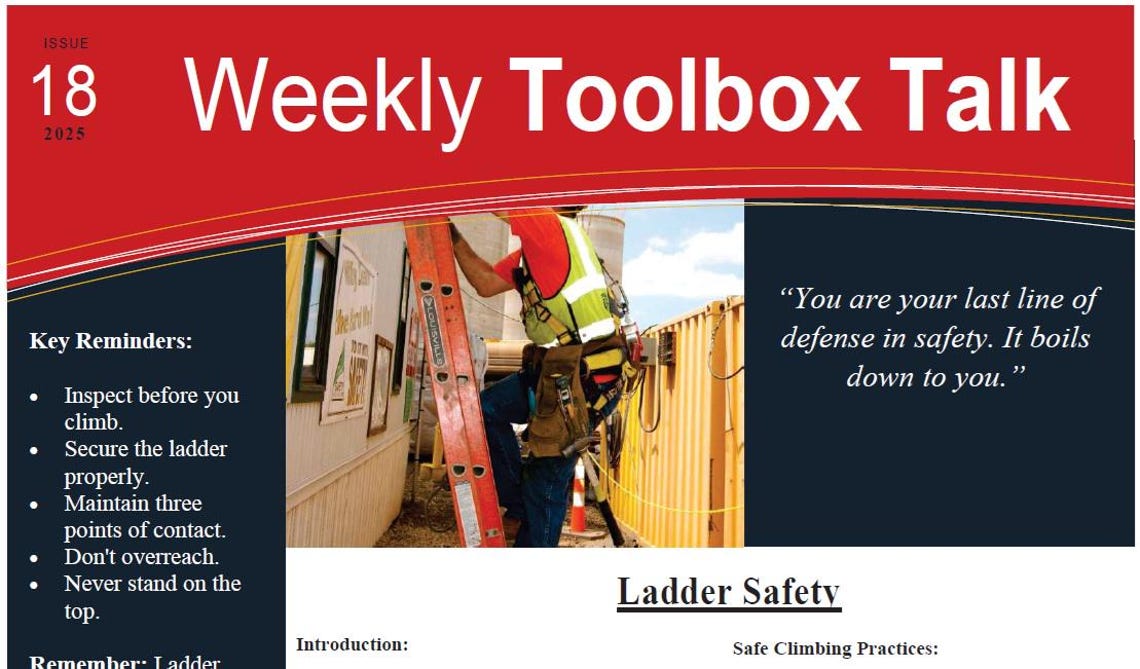
| 2 | Behavior-Based | Housekeeping, PPE compliance, ladder misuse |
| 3 | Near-Miss Review | Analyze recent incidents, invite crew input |
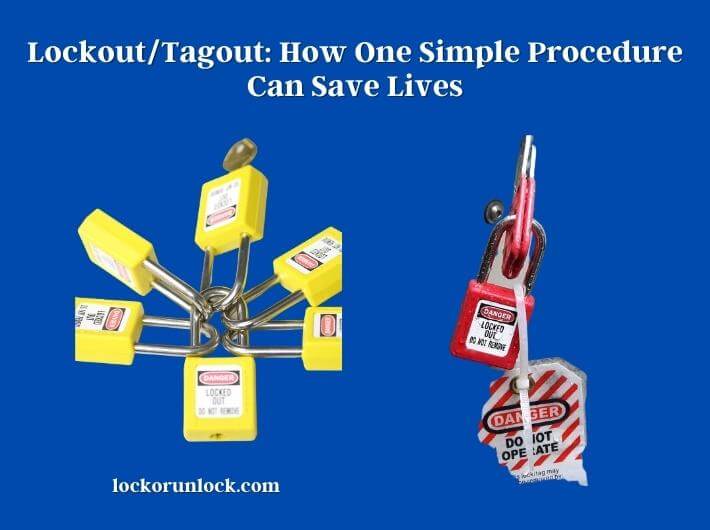
| 4 | Skill Reinforcement | Fire extinguisher use, first aid response, lockout/tagout drills |
Why this works: - Cycles ensure coverage without repetition - Near-miss weeks build psychological safety - Skill weeks maintain readiness for emergencies
One Midwest framing crew reduced hand injuries by 75% in six months using this model—specifically by dedicating Week 2 to glove use and tool handling after noticing cuts from unguarded circular saws.
Common Mistakes That Undermine Safety Talks
Even well-intentioned teams sabotage their toolbox talks. Watch for these red flags:
❌ Reading from a Script Without Context Reciting a pre-written talk about scaffolding while the crew is doing roofing sends the message: “This doesn’t apply to me.”
Fix: Customize every talk. If the topic is fall protection, focus on roof edge guards and safety nets—not generic standards.
❌ Holding Talks at the Wrong Time Schedule talks before work begins, not after lunch or at the end of the shift. Attention peaks during morning huddles.
❌ Letting the Same Person Lead Every Time
When only the safety officer talks, others disengage. Rotate facilitators weekly—even junior crew members.
Pro Tip: Train one new lead each month. Use a checklist: - Identify topic - Review site conditions - Prepare 2-3 open-ended questions - Document key points
Empowerment beats top-down instruction.
5 Practical Toolbox Talk Topics (With Real Use Cases)
Don’t guess at relevance—anchor talks in real project risks. Here are five high-impact weekly topics with field-tested examples:
1. Overhead Power Line Awareness When to use: During crane, forklift, or aerial lift operations near utilities Real case: A Texas crew avoided electrocution when a new operator noticed an unmarked power line during a talk. They rerouted the crane path. Key questions: - “What’s the minimum clearance for this equipment?” - “Who verified line de-energizing or guarding?”
2. Silica Dust Control in Concrete Work When to use: During cutting, grinding, or drilling Real case: A California renovation team reduced airborne silica by 80% after a talk emphasized wet-cutting methods and respirator fit checks. Action item: Assign someone to inspect dust controls daily.
3. Trenching and Shoring Inspections When to use:
Before any excavation over 5 feet deep Real case: A near-collapse in Ohio was prevented when a laborer referenced the previous day’s talk and halted work until shoring was adjusted. Checklist: - ✔️ Daily inspection by competent person - ✔️ No standing water or loose spoil - ✔️ Access points within 25 feet
4. Night Shift Visibility and Lighting When to use:
When crews work after dark Real case: A Florida highway crew adopted high-visibility vests with reflective stripes on both front and back after a talk highlighted blind spots in vehicle zones. Rule: No dark clothing—even under layers.
5. Mental Fatigue and Focus When to use:
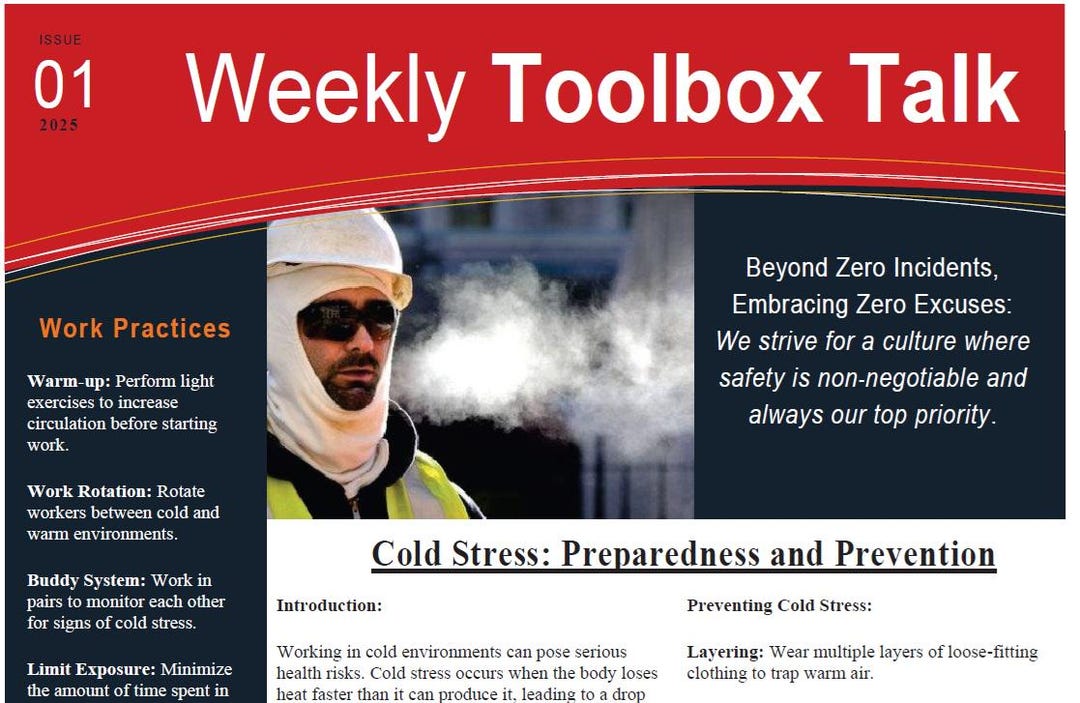
After overtime stretches or extreme heat Real case: A Seattle crew started a “buddy awareness” system where partners watch for distraction or sluggish movement. Phrase to use: “If you’re too tired to work safe, say it. No penalties.”
Integrating Toolbox Talks Into Daily Workflow
Talks shouldn’t feel like an interruption—they should feel like preparation.
Best practices for seamless integration: - Keep it short: 5–10 minutes max - Hold it on-site: At the work zone, not the trailer - Use visuals: Bring a damaged harness, show a photo of a hazard, or demonstrate a tool lockout - Link to permits: Reference the hot work permit, confined space entry form, or lift plan in the talk - Follow up: Walk the site 30 minutes later to verify compliance
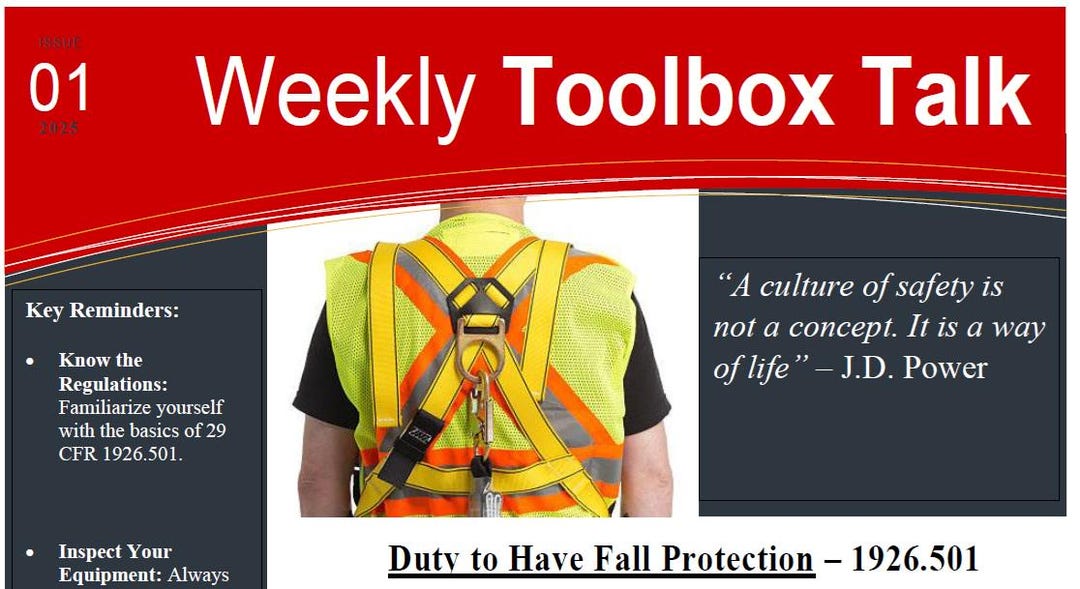
One electrical contractor ties toolbox talks to equipment startup: no forklift starts until the daily talk is complete. It’s a physical cue that safety comes before motion.
Choosing the Right Toolbox Talk Tools (5 Field-Tested Options)
Paper sign-in sheets get lost. Digital tools make tracking easier and more actionable. Here are five platforms used by real construction firms:
| Tool | Best For | Key Feature | Limitation |
|---|---|---|---|
| SafetyCulture (iAuditor) | Full safety ecosystem | Custom templates, photo uploads, real-time reports | Steeper learning curve |
| SiteDocs | Heavy civil and industrial | Offline access, automated reminders | Higher cost for small crews |
| eCompliance | Enterprise safety programs | Integrates with HR and incident systems | Overkill for <20-person teams |
| SmartToolboxTalks.com | Simplicity & speed | Pre-built OSHA-aligned topics, one-click PDFs | Limited customization |
| Google Forms + Sheets | Budget-conscious teams | Free, easy to use, accessible | No automation or alerts |
Pro insight: The best tool isn’t the fanciest—it’s the one your crew will actually use. Start simple. Upgrade when documentation gaps appear.
Making Safety Part of the Culture, Not Just the Calendar
Weekly toolbox talks fail when they’re isolated events. Succeed when they’re part of a larger safety rhythm.
- Link talks to safety KPIs: Track leading indicators like participation rate, hazard reports, and near-miss disclosures
- Recognize engagement: Publicly thank workers who speak up during talks or identify risks
- Audit your talks monthly: Are topics matching incident trends? Are facilitators rotating? Is documentation complete?
One general contractor in Colorado reduced recordables by 44% in one year—just by reviewing their talk logs monthly and adjusting topics based on trend data.
Safety isn’t a moment. It’s a pattern.
Weekly toolbox talks for construction aren’t about checking a compliance box. They’re about creating a shared language of risk, response, and responsibility.
Stop reading scripts. Start asking questions. Rotate leaders. Anchor topics in real work. Document what matters.
Run your next talk like a drill—not a formality. Because the next life saved won’t be from a policy binder. It’ll be from a five-minute conversation that someone actually heard.
Action step: Tomorrow morning, hold your next toolbox talk at the actual work zone. Ask one open-ended question. Write down the answer. Follow up before lunch.
That’s how culture changes.
FAQ What should be included in a weekly toolbox talk? A relevant hazard, site-specific conditions, 2-3 open-ended questions, a brief demonstration or visual, and documented participation with notes.
How long should a toolbox talk last? Ideally 5 to 10 minutes. Long enough to be meaningful, short enough to maintain attention.
Who should lead toolbox talks? Supervisors should lead, but crew members should rotate as facilitators to build ownership and engagement.
Are toolbox talks required by OSHA? OSHA doesn’t mandate “toolbox talks” by name, but they require ongoing safety training and hazard communication—weekly talks are the most effective way to meet this.
Can toolbox talks reduce injury rates? Yes—when done correctly, consistent and relevant talks can reduce recordable incidents by 40–60% by increasing awareness and early hazard reporting.
How often should toolbox talks be held? Weekly is ideal. Daily may be needed during high-risk operations like confined space work or major lifts.
Should toolbox talks be documented? Yes—document attendance, topic, key points discussed, and any follow-up actions. This supports compliance and continuous improvement.
FAQ
What should you look for in Weekly Toolbox Talks for Construction: Save Lives, Not Just Time? Focus on relevance, practical value, and how well the solution matches real user intent.
Is Weekly Toolbox Talks for Construction: Save Lives, Not Just Time suitable for beginners? That depends on the workflow, but a clear step-by-step approach usually makes it easier to start.
How do you compare options around Weekly Toolbox Talks for Construction: Save Lives, Not Just Time? Compare features, trust signals, limitations, pricing, and ease of implementation.
What mistakes should you avoid? Avoid generic choices, weak validation, and decisions based only on marketing claims.
What is the next best step? Shortlist the most relevant options, validate them quickly, and refine from real-world results.